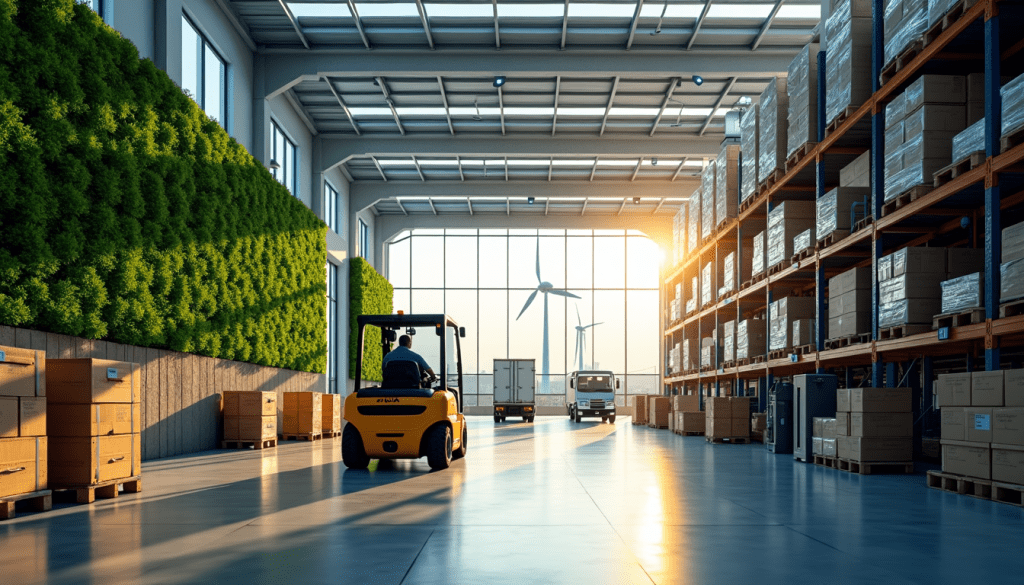
Here’s a surprising fact – logistics operations contribute about 6% of global greenhouse gas emissions. Supply chain leaders now face mounting pressure to cut their environmental impact while keeping operations running smoothly.
Sustainable logistics covers all the practises that minimise environmental damage across supply chains without compromising business success. Modern customers actively look for partners who show real environmental dedication. This makes green logistics both an environmental necessity and smart business sense. Supply chain leaders need to understand sustainability pain points to stay competitive and meet what stakeholders expect.
This piece will show you how to build green practises into your logistics operations. You’ll learn ways to measure if they work and use technology to create cleaner supply chains. We’ll get into practical strategies that can lower both your carbon footprint and operating costs.
Understanding Sustainable Logistics in Modern Supply Chains
Environmentally responsible logistics has grown into more than just green practises – it’s now a crucial business need. Companies that adopt detailed sustainability strategies have seen a 20% boost in profitability compared to others [1].
Businesses are changing their approach to sustainability in supply chains. Organisations that build environmentally responsible practises into their operations can cut costs and work more efficiently [2]. This opens up new paths to growth, especially when you have:
- Commoditized goods and fierce price competition
- Supply chain disruptions that need resilient solutions
- Green-minded customers who just need eco-friendly options
Our research proves that companies of all sizes can meet environmental goals while boosting their revenue and profits [2]. You’ll find that businesses with good environmental practises often pay less for equity and debt capital [2].
The business case for environmentally responsible logistics keeps getting stronger. Research shows that companies who miss this change risk losing both money and market share [2]. The World Economic Forum tells us that climate inaction could cost the global economy 178 trillion USD in the next 50 years [3].
This move toward sustainability in logistics helps companies find new revenue streams and reduce costs. To cite an instance, 88% of Gen Z consumers don’t trust companies’ environmental claims without solid proof [3]. This scepticism means businesses must be transparent and genuine about their environmental practises to keep customer trust and market position.
Measuring and Implementing Sustainability Metrics
Measuring sustainability in logistics needs a well-laid-out approach. Companies that use eco-friendly logistics practises have cut their fleet carbon footprint by up to 20% in five years [4].
These key metrics help measure sustainability:
- Environmental indicators: GHG emissions, energy consumption, waste generation
- Economic measures: Cost savings, operational efficiency
- Social factors: Labour practises, community involvement, supplier diversity
Leading organisations now use standardised frameworks from trusted sources like the Global Reporting Initiative (GRI), Carbon Disclosure Project (CDP), and Task Force on Climate-Related Financial Disclosures (TCFD) [5]. These frameworks offer reliable ways to measure sustainability across supply chains.
Measuring sustainability ROI comes with its challenges. There’s no standard set of metrics to evaluate sustainability returns in last-mile delivery [6]. We suggest using multiple metrics that capture both short-term and long-term effects. These include carbon emissions, fuel consumption, and customer satisfaction levels.
Our research reveals that 86% of executives see better quality in reporting and stakeholder communications when they use ESG accounting software [7]. Companies save money and reduce their environmental footprint by using energy-efficient transportation and eco-friendly packaging [8].
Clear data visualisation and digital tools help share information and overcome measurement challenges [6]. This method improves transparency and makes it easier to track progress toward sustainability goals.
Technology-Driven Sustainable Solutions
Technology-driven solutions are changing how we handle sustainable logistics. Freight and warehousing logistics alone add up to 7% of global greenhouse gas emissions [9].
Green logistics could grow to PLN 1440.82 billion in 2030. This makes up about 15% of total global logistics spend [9]. In spite of that, about half the companies don’t have any plans to reduce carbon emissions [9].
These technological solutions help close this gap:
- AI-powered route optimisation that cuts fuel use
- Smart warehouse management systems
- Predictive analytics to forecast demand
- IoT devices that track everything as it happens
Companies using route optimisation show impressive results. They cut down extra miles and work better by looking at traffic patterns and weather conditions [10]. The telematics systems also give up-to-the-minute data about how vehicles perform. This helps companies quickly step in to use less fuel [11].
Warehouse operations show great promise. GLS runs a self-sufficient, zero-emissions warehouse in Essen. This warehouse uses near-closed resource cycles for air, water, and electricity with solar panels and battery storage [9]. The original costs might be high, but the future benefits make sense. Road freight produces five times fewer emissions than air freight. Rail and ocean shipping do even better – they’re seven to 20 times more efficient [9].
These new technologies have pushed 75% of logistics companies to focus on being eco-friendly [10]. This change does more than help the environment. It creates smarter, better supply chains that help both our planet and profits.
Conclusion
Eco-friendly logistics is a key challenge reshaping modern supply chain operations. Our analysis reveals companies achieve remarkable results. Some have increased their profitability by 20% through sustainability initiatives and reduced their fleet’s carbon footprints substantially.
The business case for eco-friendly logistics becomes more compelling every day. Companies now employ standardised frameworks like GRI and CDP. They also use AI-powered solutions and smart warehouse systems to lower their environmental impact. These improvements create cost savings and competitive advantages.
The green logistics market shows promise for substantial growth. Experts expect it to reach PLN 1440.82 billion by 2030. Some challenges exist, especially when you have measurement standardisation and implementation costs. The direction ahead remains clear. Companies that welcome eco-friendly practises become industry leaders. They earn customer trust and secure long-term market success.
Supply chain leaders should know that sustainability exceeds environmental responsibility. It represents a fundamental change in business operations. This piece shows how eco-friendly logistics practises reduce costs. They boost efficiency and
 Business Ascender
Leave a comment