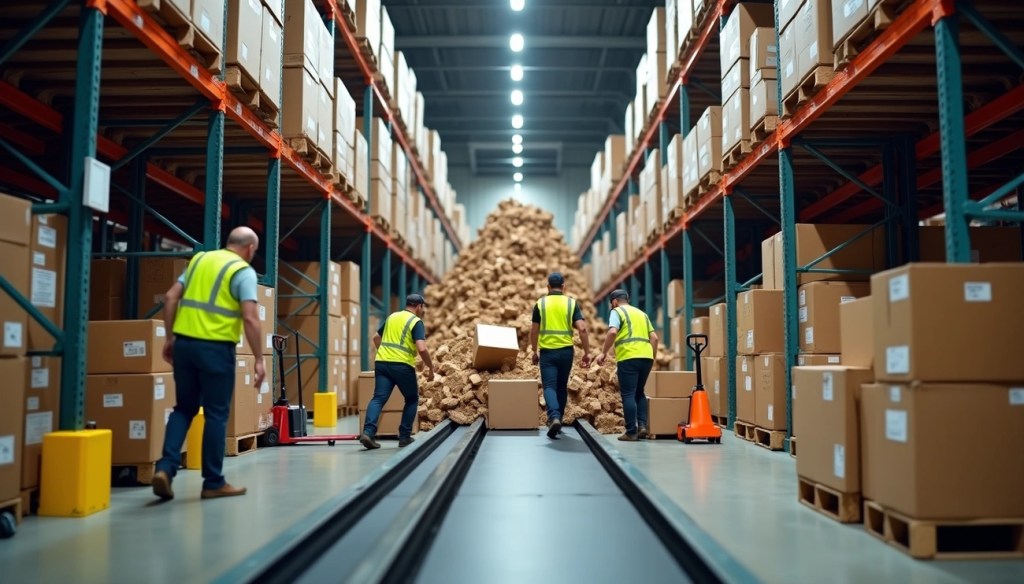
Black Friday logistics challenges can devastate even well-prepared businesses. European parcel volumes jumped by over 90% during the 2024 Black Friday week. U.S. online sales hit $10.8 billion—a 10.2% increase from the previous year. Nearly 80% of Black Friday shopping carts end up abandoned, and customers often leave because delivery options remain unclear or limited.
A single weekend of sales has reshaped the scene into a complex, international phenomenon. Many businesses face last mile logistics hurdles as carriers reach their capacity limits during peak season. Late or failed deliveries factored in about 6% of all problems, while nearly 5% of packages got lost or untracked. Return rates spike to between 15% and 30% for e-commerce apparel and electronics, and reverse logistics challenges become critical especially when dealing with high volumes. Operations slow down and profit margins shrink without reliable strategy to tackle logistics challenges. This piece explores the most important e-commerce logistics challenges 2025 will bring. You’ll find practical solutions to help your business thrive during the Black Friday season.
The volume surge that breaks systems
E-commerce systems face what feels like a digital tsunami every November. European parcel volumes jumped by over 90% during Black Friday week in 2024. This huge rush of orders doesn’t just test systems—it breaks them completely.
Why infrastructure fails under pressure
The biggest problem comes from compression: weeks of normal traffic squeezed into just a few days. Most e-commerce systems can’t handle these extreme swings. When thousands of shoppers hit “add to cart” at once, databases can’t keep up with prioritizing, locking, or syncing these transactions.
This creates a tough balance between keeping things accurate and making them fast. Accurate inventory needs constant database updates, but this slows everything down. This leads to frustrated customers who abandon their carts. So businesses end up with two bad choices: a slow website that frustrates shoppers, or inventory mistakes that lead to disappointed customers after purchase.
The numbers are eye-opening—91% of companies lose more than $300,000 for each hour their systems are down. On top of that, it takes just one second of delay to lose 11% of page views and 7% of sales.
Examples of system crashes during peak
Black Friday failures show that even the biggest companies aren’t safe:
- Nike’s website stayed down through Black Friday in 2022
- Harvey Norman lost about 60% of online sales during 2023’s Black Friday because they didn’t invest enough in their systems
- J. Crew lost around $775,000 in just five hours when their checkout crashed, with their site working only 84.75% of the time
- Saks Fifth Avenue had to extend their Cyber Monday deals into Tuesday because of major website problems
These failures hurt more than just immediate sales. About 92% of customers leave brands they love after just two or three bad experiences. In fact, 46% of shoppers stop buying from a retailer completely if their website crashes during Black Friday.
How to stress-test logistics operations
Testing is your best defense against system failures. You should start with realistic traffic simulations—not tiny traffic tests or unrealistic scenarios. Here are four key tests you need:
- Endurance testing: See how your systems handle heavy loads over long periods
- Peak testing: Check performance during sudden traffic spikes
- Load testing: Test behavior under expected scenarios
- Stress testing: Find out where your system breaks
These tests should happen weeks before Black Friday to give you time to fix any issues. Note that your website is just one piece—you need to test your whole system together, including warehouse management and shipping carrier connections.
Checkout and delivery: where most sales are lost
Your shopping cart represents potential profits until customers abandon it. Cart abandonment rates average 70.19% across industries. These numbers rise to between 73% and 78% during Black Friday. Companies lose millions in revenue because they haven’t fixed basic checkout problems that turn customers away.
High cart abandonment rates explained
Shoppers leave their carts behind for several reasons. Unexpected costs like shipping fees, taxes, or extra charges drive away 48% of customers. Another 26% quit when they must create an account. The checkout process seems too complex for 22% of shoppers. Pages that take longer than three seconds to load lose 57% of online consumers. These frustrated customers often turn to competitors, with 40% making an immediate switch.
Lack of delivery options at checkout
Limited delivery choices create a major barrier to sales. Black Friday data shows 82% of shoppers will leave their carts if they can’t find their preferred shipping method. The cost of delivery matters too – 47% of buyers abandon their purchase because shipping costs too much or they have too few options.
Impact of unclear shipping timelines
Buyers want clarity about delivery times. Research shows 54% of customers will drop their purchase if delivery schedules don’t match what they want. This demonstrates the “certainty effect” – customers need to know exactly when their orders will arrive. Half of all shoppers bail out when their chosen delivery option seems unreliable.
Customer expectations often clash with how retailers operate. UK data reveals a telling mismatch – one-third of orders come between 4-9 PM, but 40% of retailers stop shipping before 4 PM. This gap creates unnecessary friction that hurts sales. Companies can boost their conversion rates by up to 35.26% by offering clear delivery schedules and multiple shipping choices.
Carrier overload and last mile logistics challenges
Supply chains face their biggest weakness at the final link during Black Friday. Parcel volumes in Europe jumped by 93.7% during the 2024 Black Friday period. Carriers hit their capacity limits right at the time when customers needed timely delivery the most.
Over-reliance on single carriers
Industry experts call depending on just one shipping partner during peak season a “recipe for disaster”. Carriers reaching their limits force retailers to pay unexpected surcharges that cut into profit margins. Even worse, they might fail to deliver orders on time. UK retailers lose over £38 billion each year from delivery failures alone, which starts a chain reaction of unhappy customers.
How last mile delays damage customer trust
Black Friday’s first-attempt delivery success rates fell from 95.5% to 95.2%, leaving thousands of customers disappointed. Last-mile delivery delays shot up by 70% during Black Friday week. These problems go beyond just losing immediate sales—they leave lasting damage to brand loyalty. Many new customers never come back after a poor delivery experience.
Benefits of multi-carrier strategies
Companies that used three to five carriers with automated allocation had minimal delivery delays during the 2024 peak season. Businesses can handle unexpected volume spikes better by varying their shipping partners. Smaller carriers often provide better rates during busy periods, which gives companies more room to negotiate.
Using automation to allocate shipments
Automated multi-carrier platforms strike the perfect balance between flexibility and control. These systems pick the best carrier based on rates, speed, or location, so each order takes the quickest route possible. Their centralized dashboard lets companies monitor every carrier’s performance and make adjustments quickly if problems arise.
Returns and reverse logistics challenges
The logistical nightmare begins right after the Black Friday shopping rush ends – a massive wave of returns hits retailers. U.S. retail returns reached nearly PLN 3663.79 billion in 2024. Holiday season returns jumped 17% above regular levels.
Why returns spike after Black Friday
Return rates after Black Friday go beyond 20% of sales. This means retailers could lose PLN 16.47 billion during the Black Friday weekend alone. Several factors cause this surge:
- Black Friday creates a sense of urgency that guides shoppers toward impulse buying
- About 63% of shoppers buy multiple sizes knowing they’ll return what doesn’t work
- Return rates for clothes range from 20-24%, while shoes and electronics see around 18% returns
- Black Friday purchases often become unwanted holiday gifts, which creates another wave of returns in January
Common mistakes in handling returns
Retailers often hurt themselves by:
- Having return policies that are hard to find or understand, which breaks customer trust
- Using manual processes that waste resources during busy seasons
- Taking too long with refunds, which makes customers unhappy
- Looking at returns just as costs instead of seeing them as a chance to grow
How to automate and simplify returns
Automation makes returns processing much better. Merchants who used automation for returns approval cut their processing time by 100%. Teams that optimized their workflows to mark returns as received reduced processing times by 31%. Auto-refund features helped cut processing time by 43%.
Turning returns into exchanges
Smart retailers know how to keep revenue by turning returns into exchanges. Businesses that gave customers three or more return options during Black Friday kept 30% more revenue. Here’s how to get more exchanges:
- Give store credit or discounts to customers who choose exchanges over refunds
- Make exchanges free but charge for refund shipping
- Let customers exchange items for a longer time than refunds
- Show other product options during the return process
Companies that use digital returns processes usually turn 30% of returns into exchanges. This approach helps keep revenue and makes customers happier.
Conclusion
Black Friday brings huge opportunities but poses major risks for e-commerce businesses. This piece highlights critical failure points that can derail even 10-year-old retailers during peak season. The most compelling evidence shows businesses don’t fail from one problem alone – they face cascading issues across multiple operations.
A strong infrastructure serves as the foundation of success. Your business could lose more than $300,000 per hour during outages without proper stress testing and capacity planning. The checkout process stands as your best defense against cart abandonment, especially since 82% of shoppers abandon their carts when they can’t find their preferred delivery option.
Failed last-mile logistics damage customer trust beyond just losing immediate sales. Multi-carrier strategies with automated allocation systems have become necessary, not optional. Returns management offers a real chance to protect profits rather than being just another operational challenge.
A successful Black Friday operation needs advance preparation in four areas: system capacity, checkout optimization, carrier diversity, and efficient returns. Companies that excel in these elements don’t just survive – they thrive during peak season.
Black Friday’s logistics challenges may look overwhelming, but they create real competitive edges for well-prepared retailers. Your business builds lasting loyalty by delivering on promises when 80% of competitors fall short. Small operational improvements today will definitely bring substantial rewards when November arrives.
 Business Ascender
Leave a comment